
Specimen family
n = 10
REBT Irrational Beliefs
Rational Emotive Behavior Therapy (REBT), developed by Albert Ellis, focuses on the rigid beliefs that drive emotional suffering: demandingness, awfulizing, low frustration tolerance, and global rating of yourself, other people, or life.
In practice, demandingness often shows up as specific beliefs such as “I must be approved of,” “I must succeed,” “People must treat me fairly,” or “Life must be fair and easy.” REBT then asks what follows from those demands: catastrophe language, unbearable-feeling beliefs, and harsh rating of human worth.
The REBT pages below present those core irrational beliefs, plus one important applied pattern: perfectionism. They are meant to help you spot the belief underneath the surface thought and reframe it into flexible preferences, frustration tolerance, and unconditional self-acceptance.
In practice, demandingness often shows up as specific beliefs such as “I must be approved of,” “I must succeed,” “People must treat me fairly,” or “Life must be fair and easy.” REBT then asks what follows from those demands: catastrophe language, unbearable-feeling beliefs, and harsh rating of human worth.
The REBT pages below present those core irrational beliefs, plus one important applied pattern: perfectionism. They are meant to help you spot the belief underneath the surface thought and reframe it into flexible preferences, frustration tolerance, and unconditional self-acceptance.
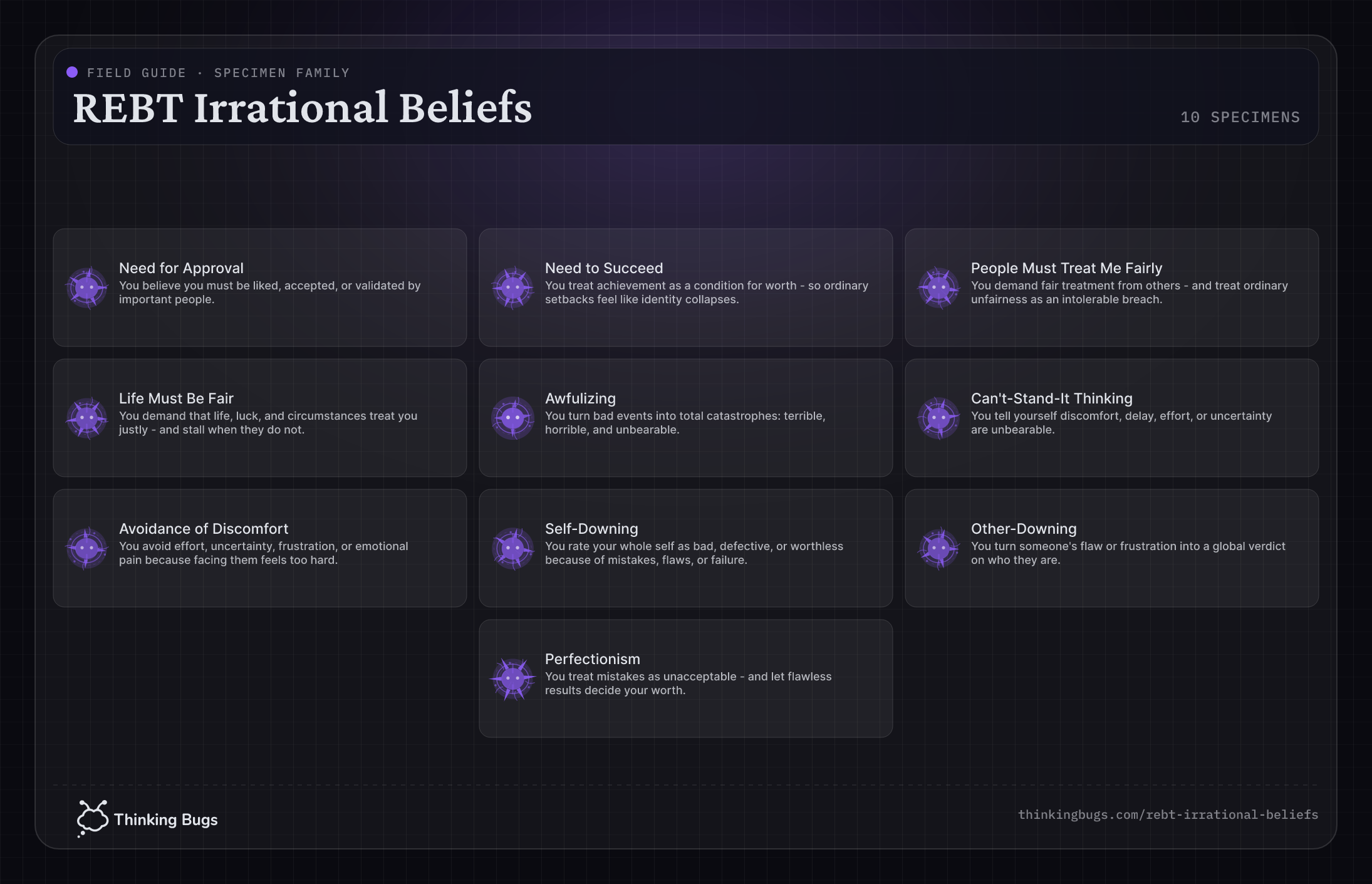

Need for Approval
You believe you must be liked, accepted, or validated by important people.
73 · High
App
Need to Succeed
You treat achievement as a condition for worth - so ordinary setbacks feel like identity collapses.
71 · High
Suc
People Must Treat Me Fairly
You demand fair treatment from others - and treat ordinary unfairness as an intolerable breach.
69 · High
PMF
Life Must Be Fair
You demand that life, luck, and circumstances treat you justly - and stall when they do not.
67 · High
FMF
Awfulizing
You turn bad events into total catastrophes: terrible, horrible, and unbearable.
67 · High
Awf
Can't-Stand-It Thinking
You tell yourself discomfort, delay, effort, or uncertainty are unbearable.
66 · High
CSI
Avoidance of Discomfort
You avoid effort, uncertainty, frustration, or emotional pain because facing them feels too hard.
69 · High
AoD
Self-Downing
You rate your whole self as bad, defective, or worthless because of mistakes, flaws, or failure.
72 · High
SD
Other-Downing
You turn someone's flaw or frustration into a global verdict on who they are.
68 · High
OD
Perfectionism
You treat mistakes as unacceptable - and let flawless results decide your worth.
75 · Severe
Prf