
Specimen family
n = 10
Behavioral Traps
Behavioral traps are cognitive biases that influence our actions, often leading to unproductive or even harmful behaviors. These biases can cause us to fall into repetitive patterns, overlook important details, or rush to conclusions without fully considering the consequences. Understanding these traps can help us break free from unproductive habits and make more thoughtful, deliberate decisions that align with our goals and values.
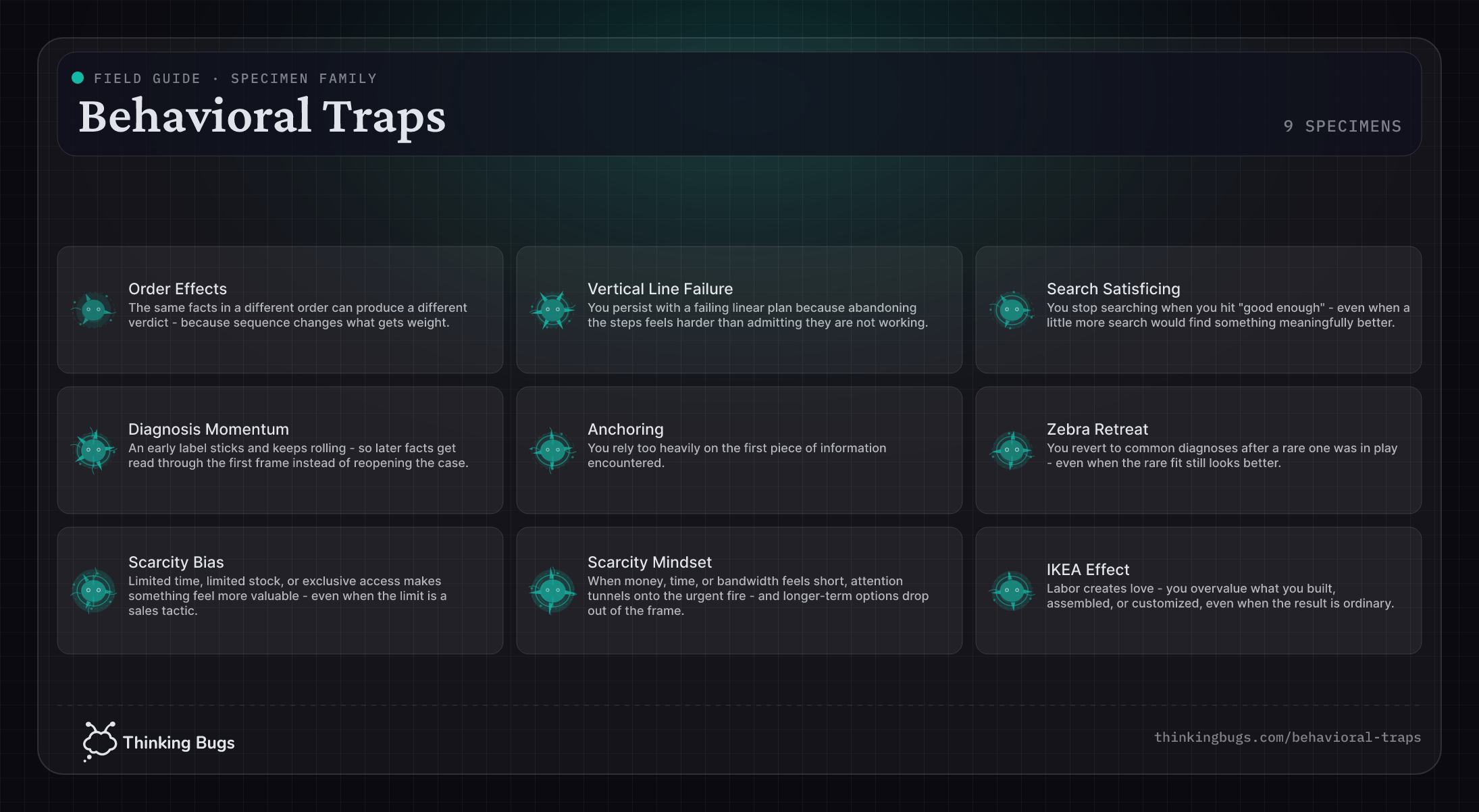

Order Effects
The same facts in a different order can produce a different verdict - because sequence changes what gets weight.
51 · Mild
OE
Vertical Line Failure
You persist with a failing linear plan because abandoning the steps feels harder than admitting they are not working.
61 · Moderate
VLF
Completion Bias
You keep going because unfinished feels wrong, even after the reason to continue has disappeared.
62 · Moderate
CmB
Search Satisficing
You stop searching when you hit "good enough" - even when a little more search would find something meaningfully better.
58 · Moderate
SS
Diagnosis Momentum
An early label sticks and keeps rolling - so later facts get read through the first frame instead of reopening the case.
70 · High
DM
Anchoring
You rely too heavily on the first piece of information encountered.
66 · High
An
Zebra Retreat
You revert to common diagnoses after a rare one was in play - even when the rare fit still looks better.
57 · Moderate
ZR
Scarcity Bias
Limited time, limited stock, or exclusive access makes something feel more valuable - even when the limit is a sales tactic.
65 · Moderate
ScB
Scarcity Mindset
When money, time, or help is scarce, urgent needs take over your attention and longer-term decisions receive less thought.
78 · Severe
ScM
IKEA Effect
Labor creates love - you overvalue what you built, assembled, or customized, even when the result is ordinary.
63 · Moderate
Ike