Tags ego · 20 specimens

Ego Biases

Specimens tagged ego. This tag cuts across specimen families - it is not a family page.

Ego biases twist thinking to protect or inflate self-image - competence, status, moral worth, or “I’m the kind of person who…”. Accuracy loses when the self feels at stake.

This tag is the counterpart to self-criticism: not the inner attack, but the defenses and boosts - self-serving stories, overconfidence, blind spots, dissonance, and related traps. The named Ego Bias specimen sits here with its neighbors.

Browse when you notice excuses, status protection, or certainty that flattens feedback - then open a specimen for how the pattern works and what to try instead.
Specimens

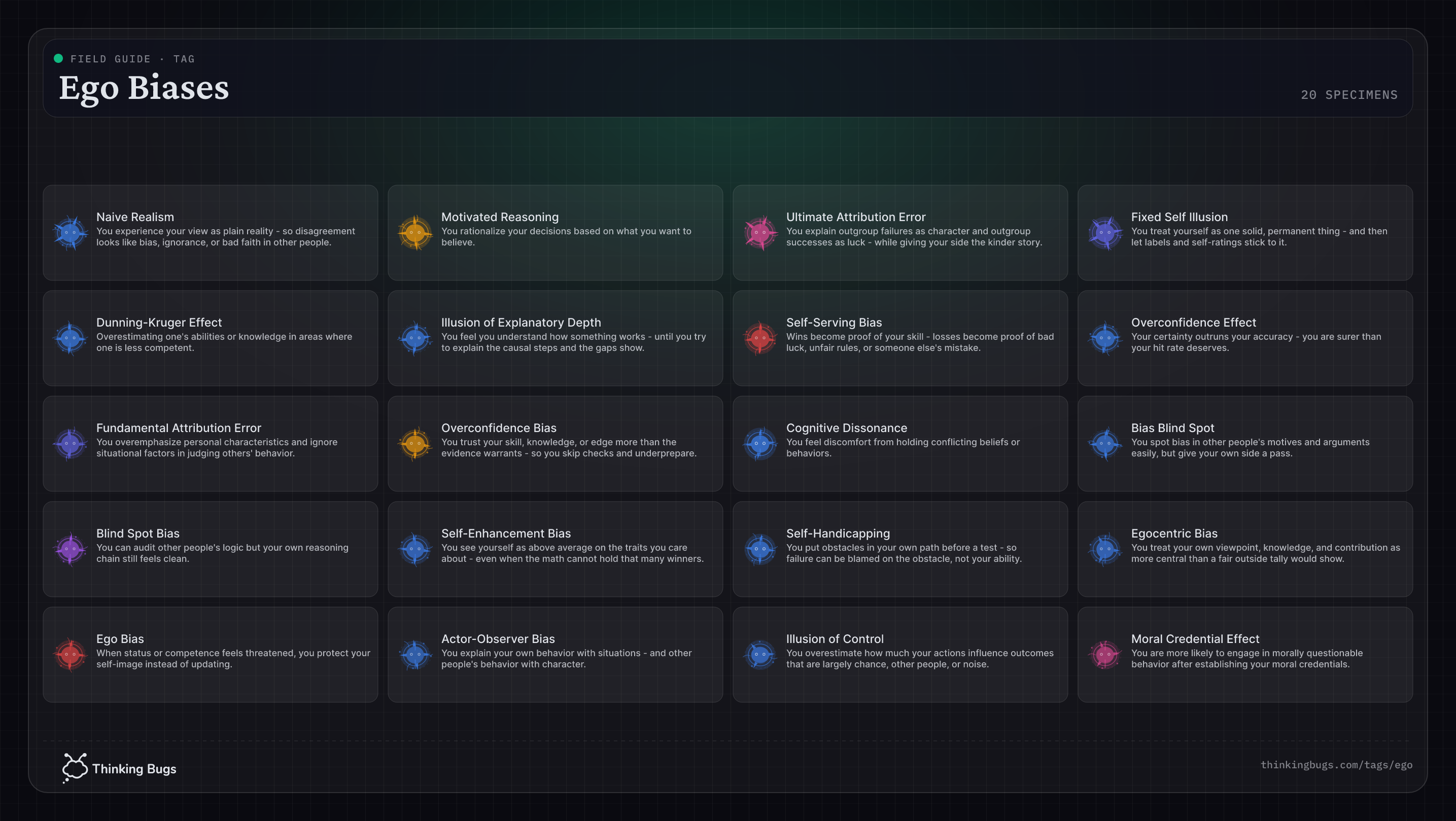
Naive Realism You experience your view as plain reality - so disagreement looks like bias, ignorance, or bad faith in other people. 79 · Severe Cognitive Motivated Reasoning You rationalize your decisions based on what you want to believe. 78 · Severe Judgment Ultimate Attribution Error You explain outgroup failures as character and outgroup successes as luck - while giving your side the kinder story. 77 · Severe Social Fixed Self Illusion You treat yourself as one solid, permanent thing - and then let labels and self-ratings stick to it. 77 · Severe Perceptual Dunning-Kruger Effect Overestimating one's abilities or knowledge in areas where one is less competent. 73 · High Cognitive Illusion of Explanatory Depth You feel you understand how something works - until you try to explain the causal steps and the gaps show. 73 · High Cognitive Self-Serving Bias Wins become proof of your skill - losses become proof of bad luck, unfair rules, or someone else's mistake. 72 · High Emotional Overconfidence Effect Your certainty outruns your accuracy - you are surer than your hit rate deserves. 71 · High Cognitive Fundamental Attribution Error You overemphasize personal characteristics and ignore situational factors in judging others' behavior. 71 · High Perceptual Overconfidence Bias You trust your skill, knowledge, or edge more than the evidence warrants - so you skip checks and underprepare. 70 · High Judgment Cognitive Dissonance You feel discomfort from holding conflicting beliefs or behaviors. 69 · High Cognitive Bias Blind Spot You spot bias in other people's motives and arguments easily, but give your own side a pass. 68 · High Cognitive Blind Spot Bias You can audit other people's logic but your own reasoning chain still feels clean. 68 · High Reasoning Self-Enhancement Bias You see yourself as above average on the traits you care about - even when the math cannot hold that many winners. 66 · High Cognitive Self-Handicapping You put obstacles in your own path before a test - so failure can be blamed on the obstacle, not your ability. 65 · Moderate Cognitive Egocentric Bias You treat your own viewpoint, knowledge, and contribution as more central than a fair outside tally would show. 65 · Moderate Cognitive Ego Bias When status or competence feels threatened, you protect your self-image instead of updating. 65 · Moderate Emotional Actor-Observer Bias You explain your own behavior with situations - and other people's behavior with character. 63 · Moderate Cognitive Illusion of Control You overestimate how much your actions influence outcomes that are largely chance, other people, or noise. 60 · Moderate Cognitive Moral Credential Effect You are more likely to engage in morally questionable behavior after establishing your moral credentials. 59 · Moderate Social