Tags anxiety · 30 specimens

Anxiety Thinking Patterns

Specimens tagged anxiety. This tag cuts across specimen families - it is not a family page.

Anxiety thinking patterns treat uncertain threats as urgent facts. The body mobilizes; the mind fills gaps with catastrophe or endless checking.

Browse specimens that fuel worry, health fear, avoidance, and intolerance of uncertainty - framed as correctable thinking bugs, not a diagnosis or treatment plan.

If a loop is active now, prefer a short counter-move from a high-harm specimen over reading the whole catalog. Name the bug, test the prediction, then act on the smaller next step.
Specimens

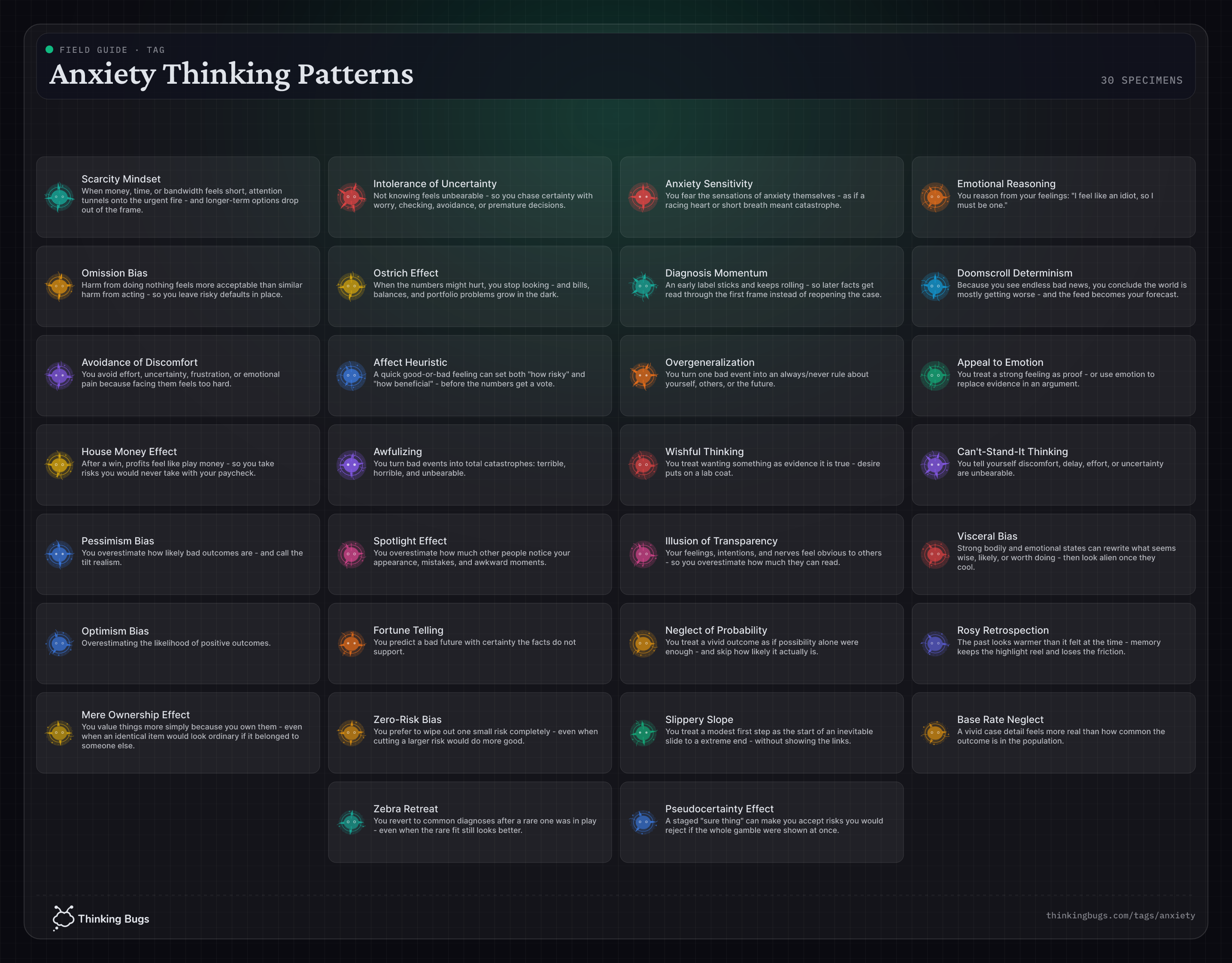
Scarcity Mindset When money, time, or bandwidth feels short, attention tunnels onto the urgent fire - and longer-term options drop out of the frame. 78 · Severe Behavioral Intolerance of Uncertainty Not knowing feels unbearable - so you chase certainty with worry, checking, avoidance, or premature decisions. 77 · Severe Emotional Anxiety Sensitivity You fear the sensations of anxiety themselves - as if a racing heart or short breath meant catastrophe. 74 · High Emotional Emotional Reasoning You reason from your feelings: "I feel like an idiot, so I must be one." 72 · High CBT Omission Bias Harm from doing nothing feels more acceptable than similar harm from acting - so you leave risky defaults in place. 72 · High Judgment Ostrich Effect When the numbers might hurt, you stop looking - and bills, balances, and portfolio problems grow in the dark. 72 · High Money Diagnosis Momentum An early label sticks and keeps rolling - so later facts get read through the first frame instead of reopening the case. 70 · High Behavioral Doomscroll Determinism Because you see endless bad news, you conclude the world is mostly getting worse - and the feed becomes your forecast. 70 · High Digital Avoidance of Discomfort You avoid effort, uncertainty, frustration, or emotional pain because facing them feels too hard. 69 · High REBT Affect Heuristic A quick good-or-bad feeling can set both "how risky" and "how beneficial" - before the numbers get a vote. 69 · High Cognitive Overgeneralization You turn one bad event into an always/never rule about yourself, others, or the future. 68 · High CBT Appeal to Emotion You treat a strong feeling as proof - or use emotion to replace evidence in an argument. 68 · High Logical House Money Effect After a win, profits feel like play money - so you take risks you would never take with your paycheck. 68 · High Money Awfulizing You turn bad events into total catastrophes: terrible, horrible, and unbearable. 67 · High REBT Wishful Thinking You treat wanting something as evidence it is true - desire puts on a lab coat. 67 · High Emotional Can't-Stand-It Thinking You tell yourself discomfort, delay, effort, or uncertainty are unbearable. 66 · High REBT Pessimism Bias You overestimate how likely bad outcomes are - and call the tilt realism. 65 · Moderate Cognitive Spotlight Effect You overestimate how much other people notice your appearance, mistakes, and awkward moments. 65 · Moderate Social Illusion of Transparency Your feelings, intentions, and nerves feel obvious to others - so you overestimate how much they can read. 65 · Moderate Social Visceral Bias Strong bodily and emotional states can rewrite what seems wise, likely, or worth doing - then look alien once they cool. 65 · Moderate Emotional Optimism Bias Overestimating the likelihood of positive outcomes. 64 · Moderate Cognitive Fortune Telling You predict a bad future with certainty the facts do not support. 63 · Moderate CBT Neglect of Probability You treat a vivid outcome as if possibility alone were enough - and skip how likely it actually is. 62 · Moderate Judgment Rosy Retrospection The past looks warmer than it felt at the time - memory keeps the highlight reel and loses the friction. 62 · Moderate Perceptual Mere Ownership Effect You value things more simply because you own them - even when an identical item would look ordinary if it belonged to someone else. 61 · Moderate Money Zero-Risk Bias You prefer to wipe out one small risk completely - even when cutting a larger risk would do more good. 60 · Moderate Judgment Slippery Slope You treat a modest first step as the start of an inevitable slide to a extreme end - without showing the links. 59 · Moderate Logical Base Rate Neglect A vivid case detail feels more real than how common the outcome is in the population. 58 · Moderate Judgment Zebra Retreat You revert to common diagnoses after a rare one was in play - even when the rare fit still looks better. 57 · Moderate Behavioral Pseudocertainty Effect A staged "sure thing" can make you accept risks you would reject if the whole gamble were shown at once. 56 · Moderate Cognitive